Software engineer · creative tools, canvas, and 3D graphics · Los Angeles
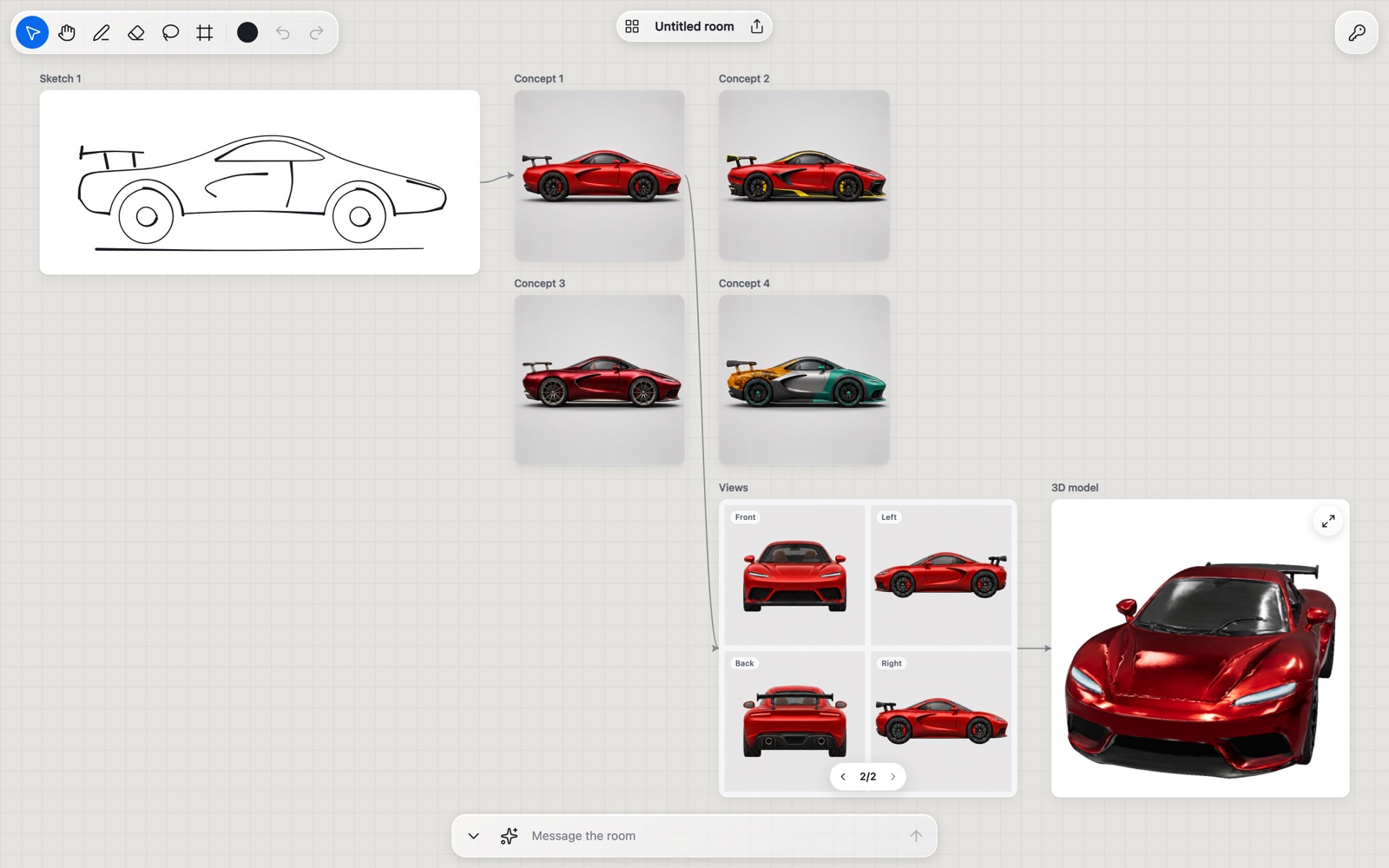
I build creative tools for the browser: shared canvases, GPU drawing engines, and 3D sculpting. My latest, Kiln, takes a design from a pen sketch to a textured 3D model on a multiplayer canvas.
Professionally I worked on a WebGL CAD renderer at Zea, then built Unity SDKs for outside developers at Genies, where I now work full stack on React, Go, and real-time services. Four of my projects are live below.
TypeScript, React, Yjs (CRDT), Cloudflare Durable Objects and Workflows, three.js
A shared infinite canvas that takes a design from sketch to 3D model. Sketch it, generate four concepts, turn one into front, left, back, and right views, mark up what's wrong and regenerate, then build a textured 3D model from the views. Everyone in the room sees every card and every job's progress live.
Each room is one Durable Object holding a Yjs document and an SQLite job log. AI work runs as Cloudflare Workflows, so a two-minute 3D job survives retries and reports progress back to the room. To get several images from one image call, the image model draws into a template grid, and the server slices the result into separate cards and checks each cell for empty or bleeding content before keeping it. Image and 3D generation use hosted models; the canvas, sync, job orchestration, and slicing are my work.
Open Kiln· drawing and rooms are open; the AI steps need an access code, which I'm happy to share
Voxel Sculptor
Rust, wgpu, WGSL compute shaders, WebGPU
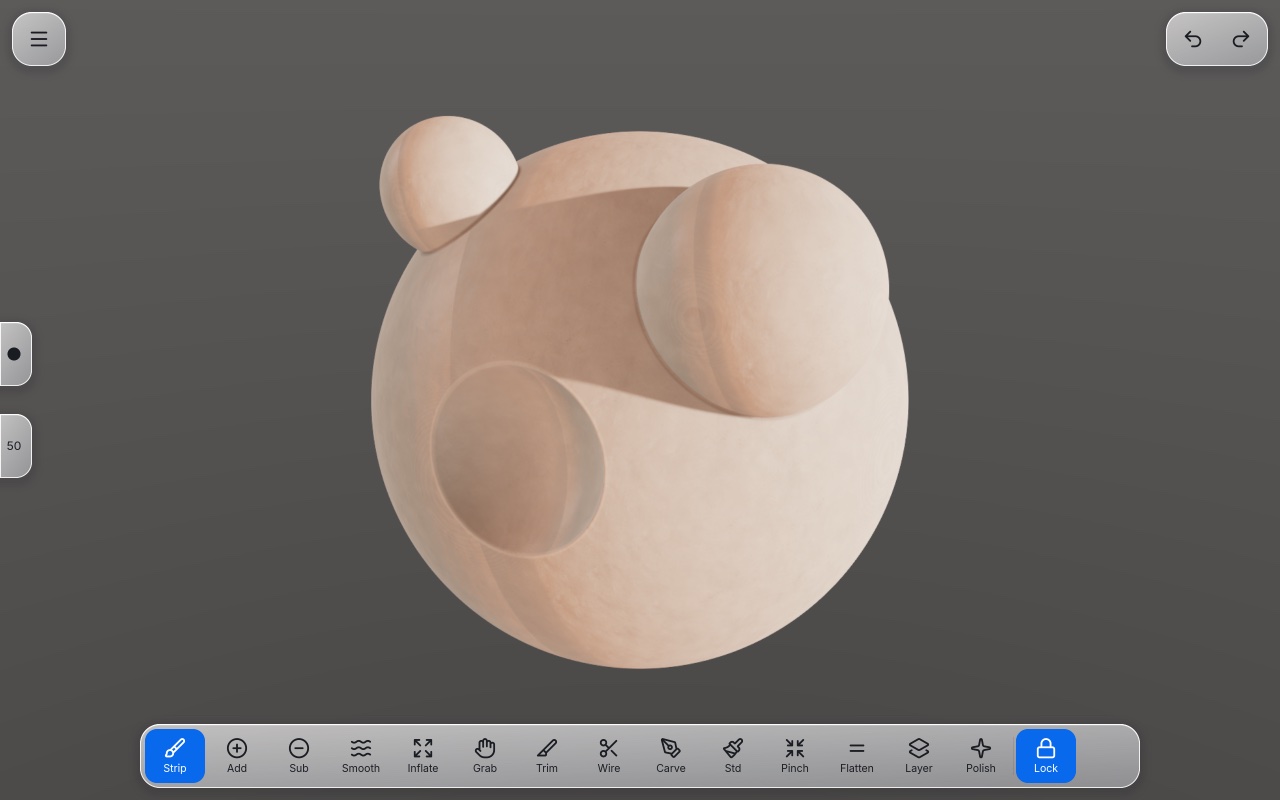
A clay sculpting tool that runs in the browser with WebGPU. Fourteen brushes, including add, carve, smooth, inflate, grab, clay strips, pinch, and flatten, push and pull a sparse signed-distance volume in real time.
Everything stays on the GPU. The volume lives in sparse bricks that compute shaders allocate and edit, and each frame the CPU uploads only the camera and brush. Rendering ray-marches the bricks with a hierarchical DDA, and every edit re-solves the distance field around the bricks it touched, so the surface stays smooth instead of pitting or beading.
Open the demo· needs a browser with WebGPU, such as recent Chrome, Edge, or Safari
Drawing SDK
Rust, wgpu, WebAssembly, Swift
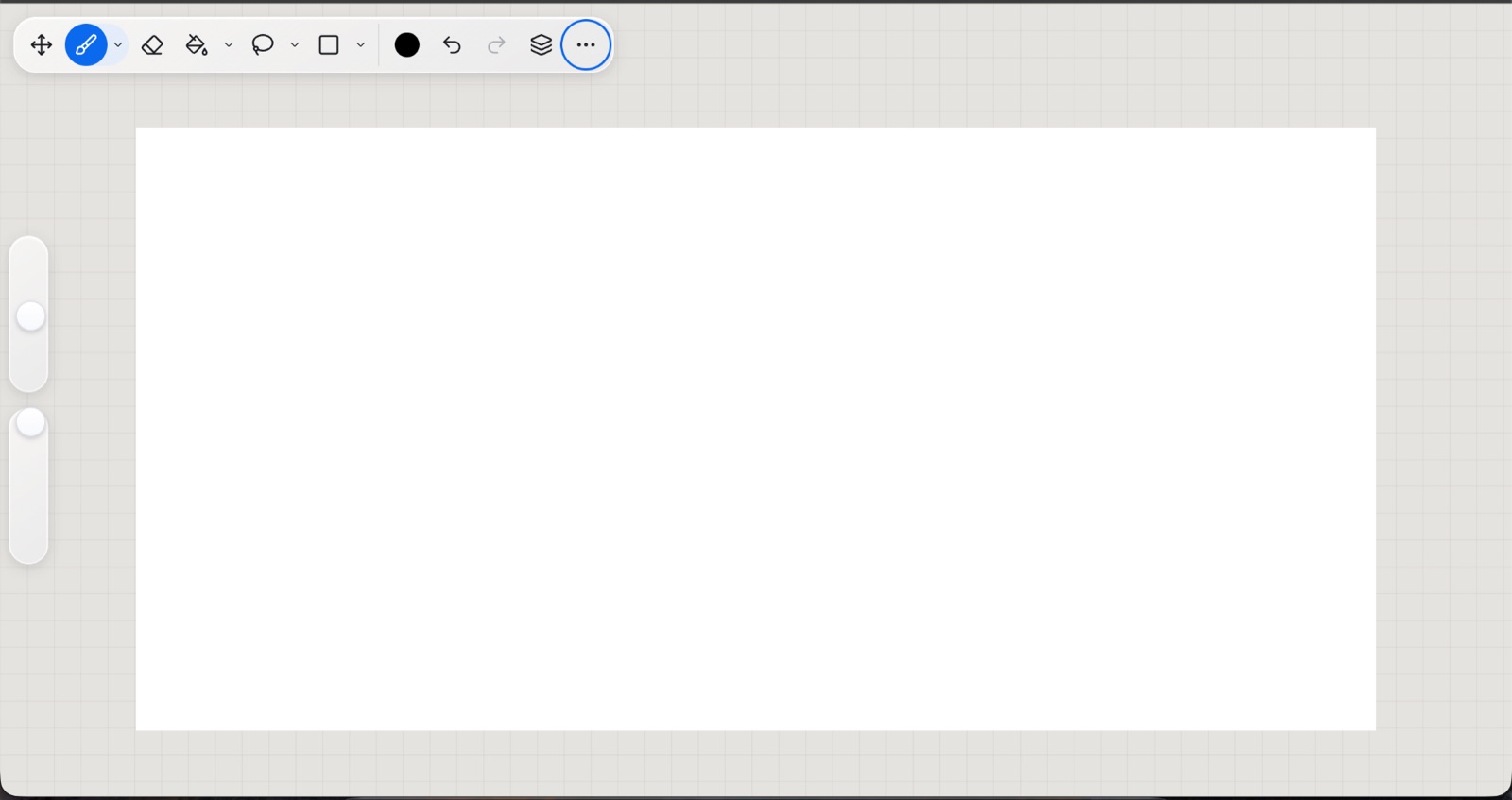
A GPU drawing engine that runs in the browser with WebGPU and natively on iOS. It renders a tiled raster canvas and has pressure- and tilt-sensitive brushes, selection, fill, undo, and SQLite persistence.
Most of the work went into keeping the pen responsive. Input, rendering, and saving run separately. The canvas only redraws when something changes, and browser storage runs in a worker, so disk work stays off the input path. Coalesced pointer events and Apple Pencil's predicted touches go through the same coordinate mapping as pan and zoom.
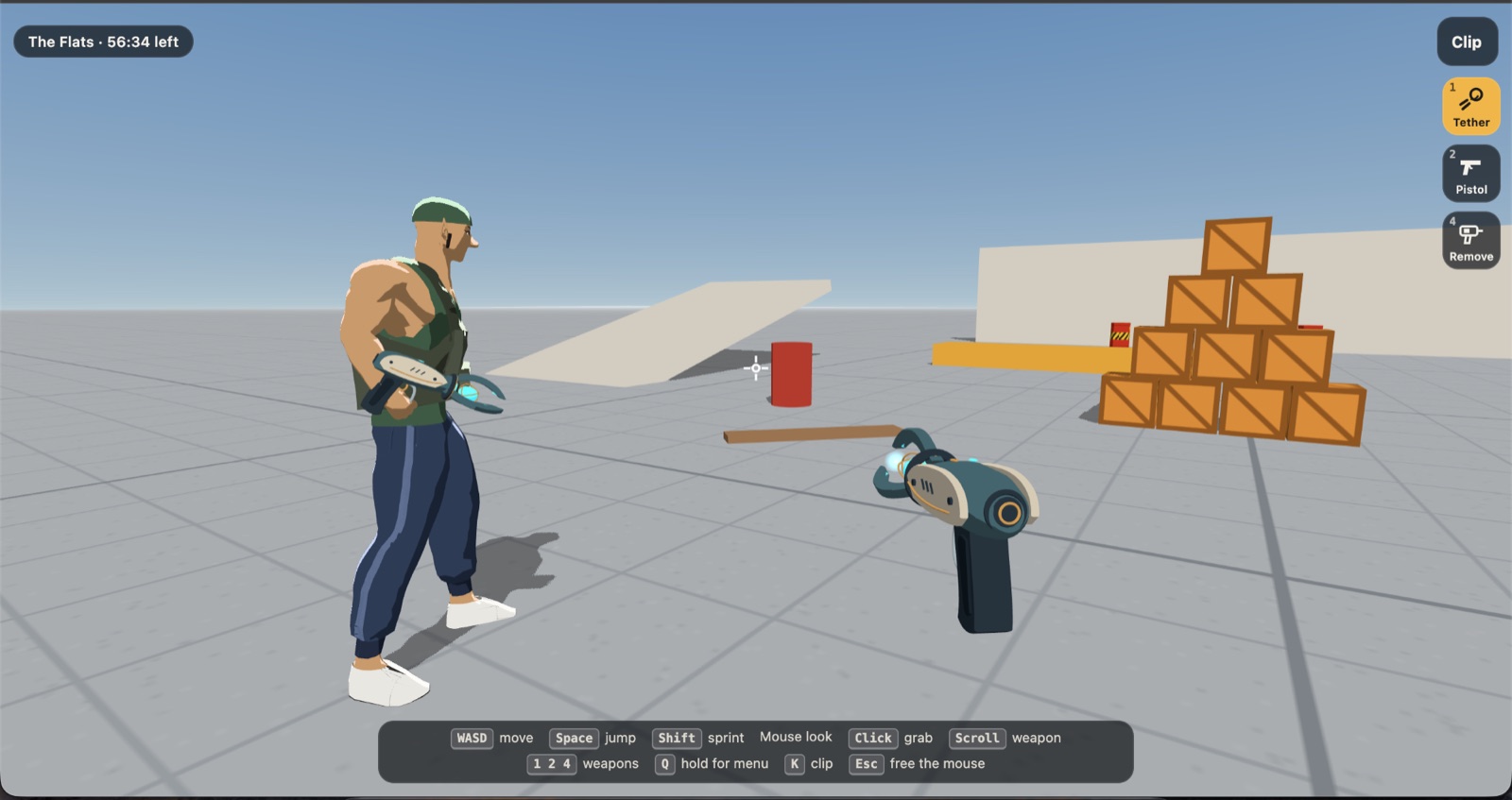
A multiplayer 3D sandbox where players grab, move, and throw props together, then record, scrub, and export a take. A Rust server runs the simulation at 30 Hz and owns the result.
The challenge is making a prop feel like it's in your hand when the server decides where it is. The client predicts locally, reconciles against delta snapshots, and recovers after a dropped connection. Rooms run on Edgegap and connect over WebTransport (QUIC) where the browser supports it, falling back to WebSocket elsewhere.
Open the demo· start a room and open it in two tabs, or choose “Play alone”
Other work
Animator· in progress: a Rust animation editor for web, mobile, and desktop that layers drawings, 3D scenes, and images on one timeline. One SDK drives the editor, a CLI, and MCP clients.
Voxel engine· 2021: a voxel renderer built on compute shaders.
Experience
Genies
2025 – now
Full Stack Engineer
Admin and creator portals in React and Next.js, with Go APIs and OpenAPI contracts for avatar assets and content catalogs. Generated SDKs for Unity/C#, C++, and TypeScript. Durable WebSocket notifications with reconnect replay, acknowledgments, and multi-region routing.
Genies
2022 – 2024
Software Engineer, Unity
SDK and runtime systems that let outside developers build experiences for a shared Unity launcher on iOS and Android. Designed much of the launcher's physics-layer and collision-matrix integration. Also built dialogue tools, visual-scripting APIs, native mobile integrations, and image caching.
Zea
2021 – 2022
Graphics Developer
Migrated a browser-based 3D CAD rendering SDK to TypeScript, cleaned up its render-state and shader interfaces, and fixed WebGL rendering regressions. Wrote unit and end-to-end tests, CAD memory tests, and developer docs.
University of British Columbia
2021
BSc, Computer Science
Skills
Graphics & tools
Rust, wgpu, WebGPU, WGSL and Metal shaders, Swift, C#, Unity, pen and touch input